GetPropertyByName
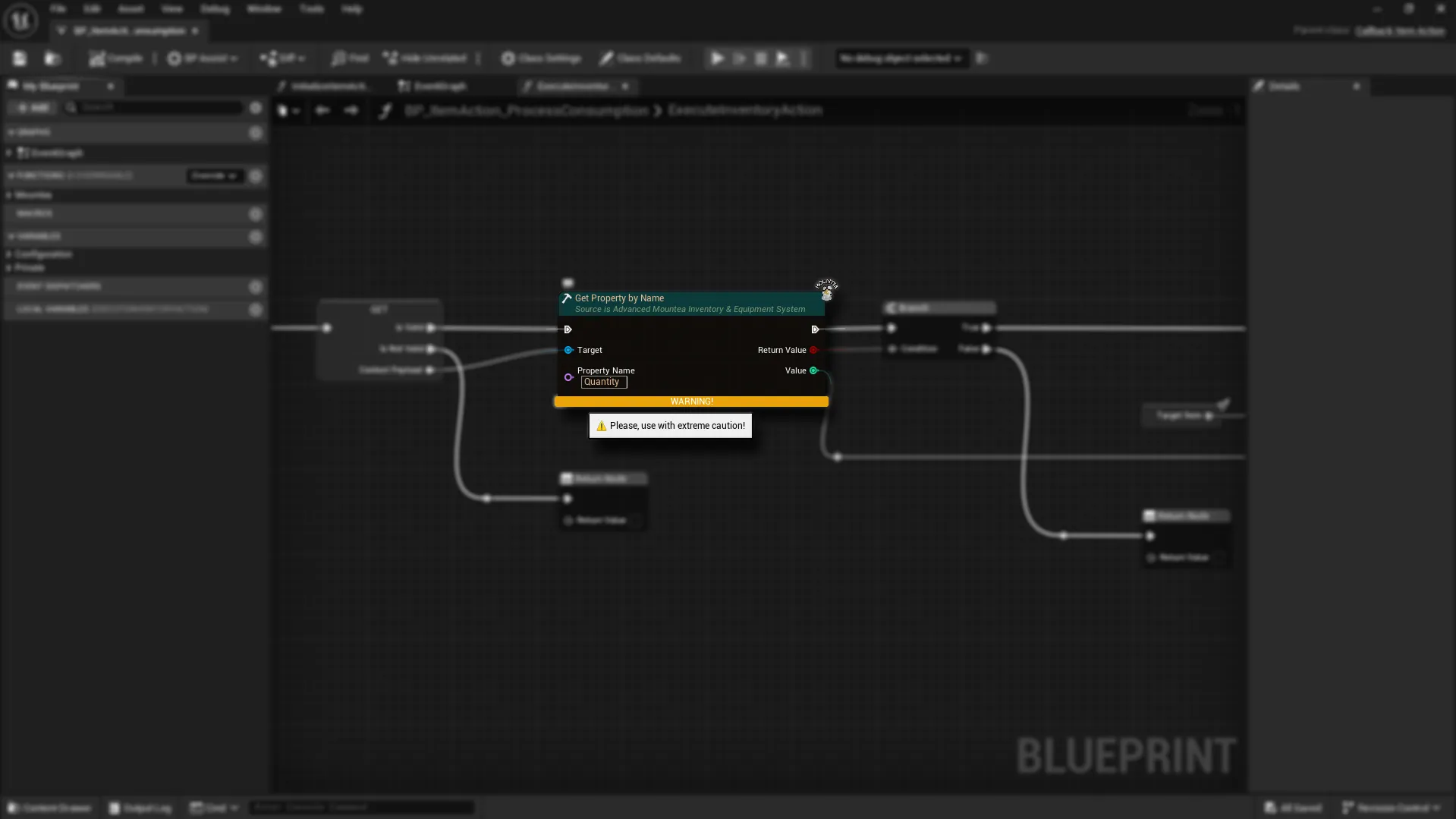
Use Get Property by Name when you want to read a value from an object without casting and without making a dedicated getter for every possible variable. You tell it who (Target) and what (Property Name), and it tries to pull the value out for you.
Use with caution
This node reads the value directly. It does not call any getter function. If your project relies on getters for validation, clamping, events, or side-effects, this node will bypass all of that.
Why you’d use it
- You’re working with a variety of object types and don’t want a pile of casts.
- You want one “universal” read node for UI, debugging, or tooling.
- You’re building flexible systems where the property name comes from data (tables, configs, tags, etc.).
Real-World Analogy
Like checking a label on a storage box and reading what’s inside - without needing to know who packed it or what brand the box is.
Where to find it
Pins (what you connect)
- Execute / Then: Standard execution flow.
- Target: The object you want to read from.
- PropertyName: The exact property name to read. If it doesn’t exist, the node fails.
- Value: The output value (type is decided by what you connect it to).
- ReturnValue: true/false result - false means “property not found” or “type mismatch”.
Important
Value must be connected to something typed (like a Float, Bool, FVector, etc.).
If you leave it unconnected, the node can’t know what type you expect and it will error during compilation.
Quick use
- Plug your object into Target
- Type the PropertyName (case-sensitive, must match the real property name)
- Connect Value into something that defines the type you expect (a variable, a setter, a print formatting node, etc.)
- Check ReturnValue before using the output
Common pattern
Use ReturnValue → Branch
- True: use Value
- False: fall back to defaults / show debug message
Supported output types
This node supports reading these kinds of values (and more structs):
- Int / Int64
- Float
- Bool
- String / Name
- Byte
- Object / Soft Object
- Class / Soft Class
- Any UStruct (FVector, FGuid, your own structs, etc.)
Objects / Classes
For Object/SoftObject and Class/SoftClass values, you’ll typically still need to cast the output to your specific type after reading it.
Gotchas (things that bite)
- Spelling matters: if the property name is wrong, you’ll just get ReturnValue = false.
- Type must match: asking for a
Floatwhen the property is actually anIntwill fail. - Not a “safe getter”: it bypasses getter logic and any side effects.